
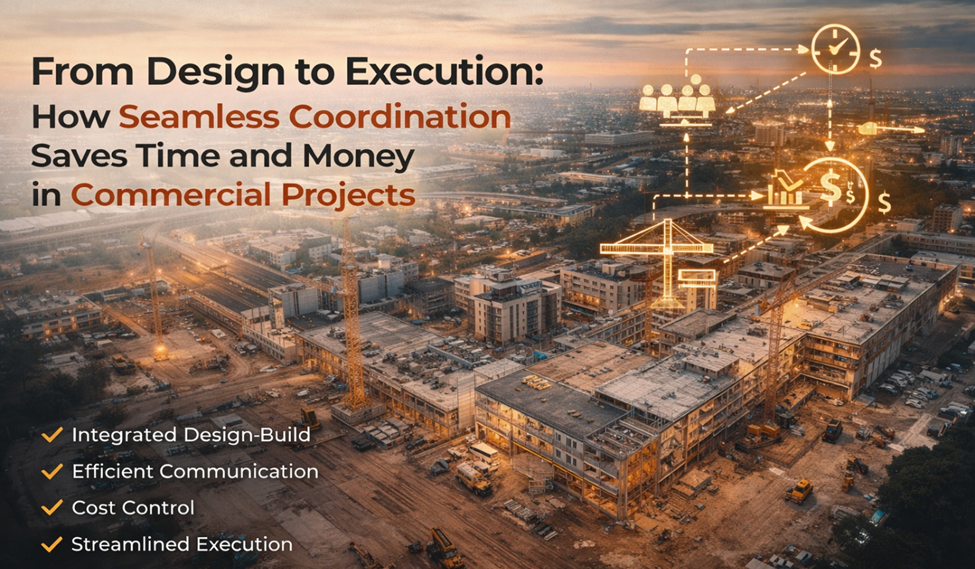
In commercial construction, delays and budget overruns are often not caused by complexity—but by misalignment. When design, construction, and procurement teams operate in silos, communication gaps lead to costly mistakes. A seamless coordination approach, especially within a turnkey design-build model, ensures that every phase of the project is aligned from day one. This results in faster timelines, controlled budgets, and higher-quality outcomes.
Why Fragmented Project Delivery Fails
Traditional project delivery separates architects, contractors, and vendors into independent roles. While this may seem structured, it often leads to disconnects between design intent and execution. Misinterpretations, delayed approvals, and constant revisions become the norm. These inefficiencies increase project costs and extend timelines—something no commercial client can afford.
The Power of Integrated Design-Build
A turnkey design-build approach eliminates fragmentation by bringing all stakeholders under one roof. From concept development to final construction, every team works collaboratively. This integration ensures that designs are practical, budgets are realistic, and timelines are achievable. The result is a streamlined commercial construction process that minimizes risk and maximizes efficiency.
Real-Time Collaboration and Faster Decision Making
When design and construction teams collaborate in real time, decisions are made faster and with greater accuracy. Changes in layout, materials, or scope can be evaluated instantly for cost and feasibility. This proactive approach prevents delays and ensures that projects stay on track. In fast-paced commercial environments, speed and clarity are critical.
Cost Control Through Early Planning
One of the biggest advantages of a coordinated approach is cost control. By involving construction and procurement teams during the design phase, potential issues are identified early. Material selections, labor requirements, and logistics are planned with precision. This reduces unexpected expenses and keeps the project within budget—an essential factor in commercial project success.
Improved Quality and Consistency
Consistency in execution is only possible when everyone is aligned with the same vision. Integrated teams ensure that the final build reflects the original design intent. From finishes to fixtures, every detail is executed with accuracy. This level of quality is what differentiates a well-managed commercial space from an average one.
Efficient Procurement and Material Management
Procurement plays a critical role in project timelines. Delays in sourcing materials can halt construction progress. A coordinated design-build model ensures that procurement is aligned with the construction schedule. Materials are ordered on time, delivered efficiently, and installed without disruption—keeping the workflow smooth and predictable.
Single Point of Accountability
One of the biggest challenges clients face is managing multiple vendors. A turnkey approach offers a single point of contact responsible for the entire project. This simplifies communication, reduces confusion, and ensures accountability. Clients can focus on their business while the project is handled end-to-end.
The Future of Commercial Construction
As commercial projects become more complex, the demand for efficient, integrated solutions continues to grow. Turnkey design-build is not just a trend—it’s the future of the industry. Businesses are recognizing the value of having one team handle everything from design to execution.
Conclusion: Build Smarter, Not Harder
Successful commercial spaces are not just about great design—they are about flawless execution. By choosing a coordinated, turnkey approach, businesses can save time, reduce costs, and achieve better results. At TRNKY, we believe that true efficiency comes from integration, and that’s how we deliver spaces that truly work.