
Introduction
In the world of commercial construction and interior design, projects have traditionally been fragmented. A client hires an architect, then a contractor, then a procurement company, and often several consultants along the way. Each party operates independently, which can create delays, miscommunication, budget overruns, and a stressful experience for the client.
In recent years, a different approach has been gaining traction across the industry: the turnkey design-build model. Instead of coordinating multiple vendors, clients work with a single integrated team responsible for the entire project from concept to completion.
What “Turnkey” Really Means
The term turnkey refers to a project that is delivered fully completed and ready for immediate use. The idea is simple: when the client receives the space, they can “turn the key” and start operating.
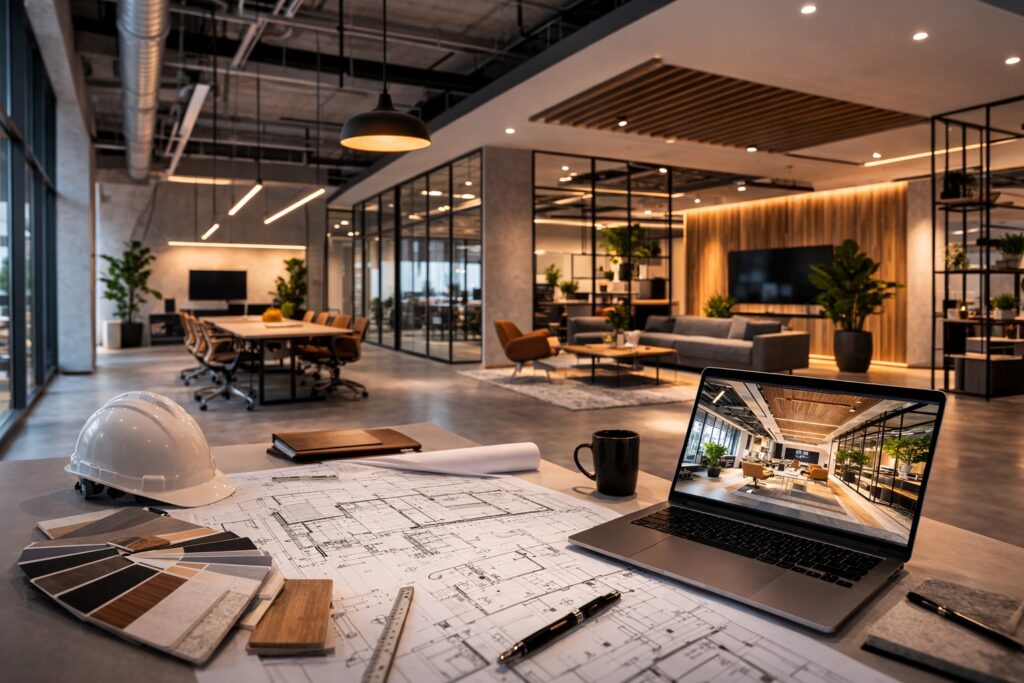
In a turnkey design-build system, one company manages every stage of the project, including:
• Concept development and architectural design
• Interior design and spatial planning
• Construction and project management
• Procurement of materials, furniture, and fixtures
• Installation and final delivery
This unified process eliminates the gaps that often occur when multiple vendors are responsible for different parts of the same project.
The Problem with Traditional Project Structures
Traditional construction projects often follow a design–bid–build model. In this approach, the architect designs the project, contractors bid on the plans, and the client chooses a builder based largely on price.
While this system can work, it frequently introduces several challenges.
First, communication between the architect and contractor can become disconnected. If design decisions are made without construction input, the project may face costly revisions once building begins.
Second, procurement is often treated as a separate process. Furniture, fixtures, and specialty materials may be sourced later, which can cause schedule disruptions if items have long lead times.
Finally, the client becomes responsible for coordinating between multiple parties, which adds unnecessary complexity to what should be an exciting transformation process.
The Advantages of the Turnkey Approach
A turnkey design-build model simplifies the entire experience for the client while improving project efficiency.
Unified Vision
Because the same team handles both design and construction, the project maintains a consistent vision from the initial concept through final installation. Designers understand how their ideas will be built, and builders understand the design intent behind every detail.
Faster Project Timelines
When design, construction, and procurement teams collaborate from the beginning, decisions happen faster. Materials can be sourced earlier, construction planning begins sooner, and scheduling becomes more predictable.
Greater Cost Transparency
Turnkey firms often provide early budget guidance, allowing clients to make informed decisions before construction begins. Because the same team manages both design and execution, cost surprises are significantly reduced.
Simplified Communication
Instead of managing multiple vendors, clients communicate with one project team that oversees every phase. This dramatically reduces confusion and improves accountability.
Why Design Matters in Commercial Spaces
Beyond efficiency, thoughtful design plays a crucial role in how businesses operate.
A well-designed office can improve employee productivity and collaboration. Retail spaces can influence customer behavior and increase sales. Healthcare environments can reduce stress and improve patient experiences.
Design is not simply about aesthetics—it directly impacts how people interact with a space and how effectively that space serves its purpose.
Integrating Architecture, Interior Design, and Procurement
Modern commercial projects require more than just construction expertise. They require a deep understanding of how architecture, interior design, and material procurement work together.
For example, selecting the right lighting system affects not only the atmosphere of a space but also energy efficiency and long-term maintenance costs. Similarly, furniture layouts influence workflow, circulation, and spatial flexibility.
When these decisions are made collaboratively rather than separately, the final result is a space that feels intentional, cohesive, and highly functional.
The Future of Project Delivery
As businesses demand faster timelines, clearer budgets, and higher quality results, the turnkey design-build model continues to grow in popularity.
Clients increasingly value partners who can guide them through the entire process—from the first design sketch to the final installation of furniture and fixtures.
Rather than juggling multiple contracts and consultants, they prefer a single team that takes full responsibility for delivering a finished space.
Conclusion
The way commercial spaces are designed and built is evolving. Integrated project delivery methods such as turnkey design-build are reshaping the industry by making projects more efficient, transparent, and client-focused.
When design, construction, and procurement work together under one coordinated system, the result is not only a smoother process but also a better space—one that is ready for business the moment the client walks through the door.
For companies planning new offices, retail stores, hospitality venues, or commercial facilities, the turnkey approach offers a smarter, more streamlined path from concept to completion.